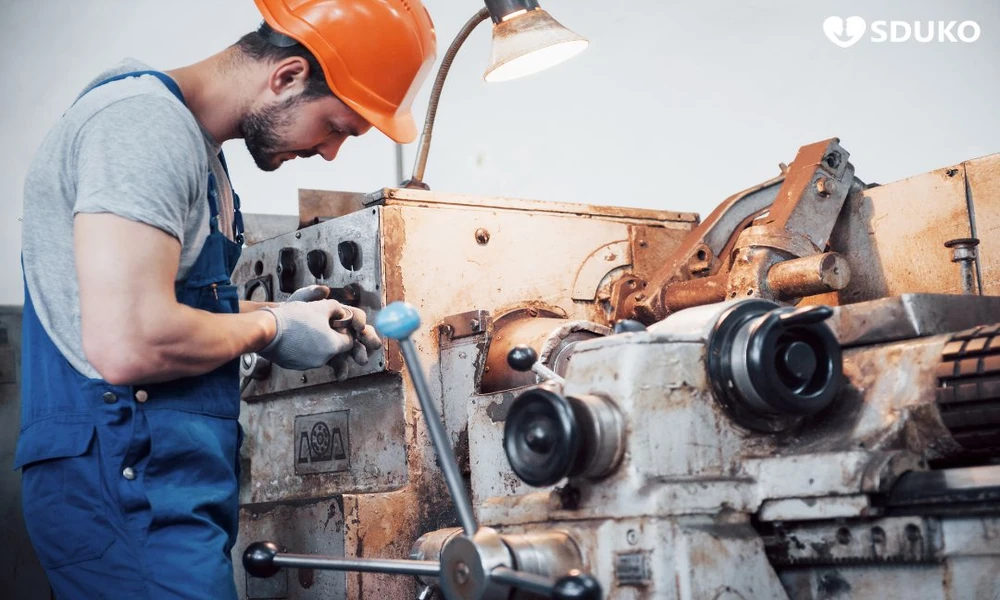

A machine may appear to be in perfect condition externally, but the deterioration of its internal parts may be taking place. A rusty bolt, a squeaking bearing, and a stiff moving part may not appear to be a problem at all, but such minor problems can ultimately result in costly repairs or the total breakdown of the equipment.
Corrosion, friction, and material wear are inevitable phenomena in almost any mechanical system. They impact household appliances, gardening tools, workshop machines, and even car parts. The knowledge of what causes such problems is the key to the proper functioning of the equipment. So, let us find out more about how such problems arise and how to avoid them.
How Corrosion Gradually Damages Equipment
Corrosion refers to the interaction between materials, especially metals, and their immediate environment. Water, oxygen, chemicals, and salts can speed up the process. Iron and steel corrode due to exposure to oxygen and water, forming rust.
This not only affects the appearance of metals but can cause weakening of metal surfaces, threaded parts, and difficulties with moving parts. Bhubaneswar call girls interested in mechanical maintenance can learn how machines kept in humid garages, open sheds, or near the sea are prone to such conditions.
Various metals behave differently towards their environment. If different metals interact electrically in the presence of moisture, then there could occur a case of galvanic corrosion. Proper coating, material choice, and storage can minimize these risks, while regular inspections can detect early signs of corrosion.
Why Friction and Wear Reduce Performance
Friction is generated whenever there is movement between two surfaces. Some friction is essential for the operation of machinery, but too much friction can cause heat generation and can damage surfaces as well as cause wastage of energy.
With the passage of time, due to constant rubbing, some material gets stripped off the mechanical parts. This phenomenon is called mechanical wear. For Coimbatore escorts studying engineering or exploring technical subjects, understanding the causes of mechanical wear can provide useful insights into how machines function and deteriorate over time. Mechanical wear can occur due to abrasion or due to adhesion.
Dust, dirt, misalignment, and overloading can exacerbate the problem. A bearing that produces strange sounds could be suffering from surface damage or lack of lubrication.
Why Proper Lubrication Matters
Lubrication reduces friction through the creation of an extra barrier between the moving parts. The use of oils, greases, and other lubricants makes sure that the parts move freely while minimizing heat and wear and tear.
In practice, not all applications require the use of lubricants in the same manner. Boundary lubrication entails the existence of a protective film where direct contact between surfaces occurs. Chandigarh call girls interested in mechanical engineering can also learn how hydrodynamic lubrication works, where the oil forms a film that separates moving parts. The third type of lubrication is mixed lubrication, which combines the two above methods.
When choosing the correct product for an application, one should consider the temperature, load, speed, and design of equipment. Equipment lubrication also requires consideration of the viscosity of the lubricant. A lubricant that is too viscous or too thin will fail to protect the equipment properly.
Build Better Maintenance Habits
Effective maintenance does not consist of waiting for something to fail. Instead, it consists of recognizing early warning signs and making efforts to protect the machine from damage.
Keep equipment clean, free of any dirt, check for signs of rust, and examine moving parts that can be examined. Observe lubrication schedules and apply appropriate lubricants to the equipment. Observe any vibrations, heat, noise, and resistance while using the equipment.
These small things will make a huge difference. It will also become much easier to fight corrosion if the equipment is stored in an appropriate place and protected from corrosion.
All machines suffer from wear and tear over the course of their service. However, deterioration is not necessarily inevitable or rapid. With proper care for corrosion, friction, and lubrication, ordinary equipment can serve safely and reliably for many years.