
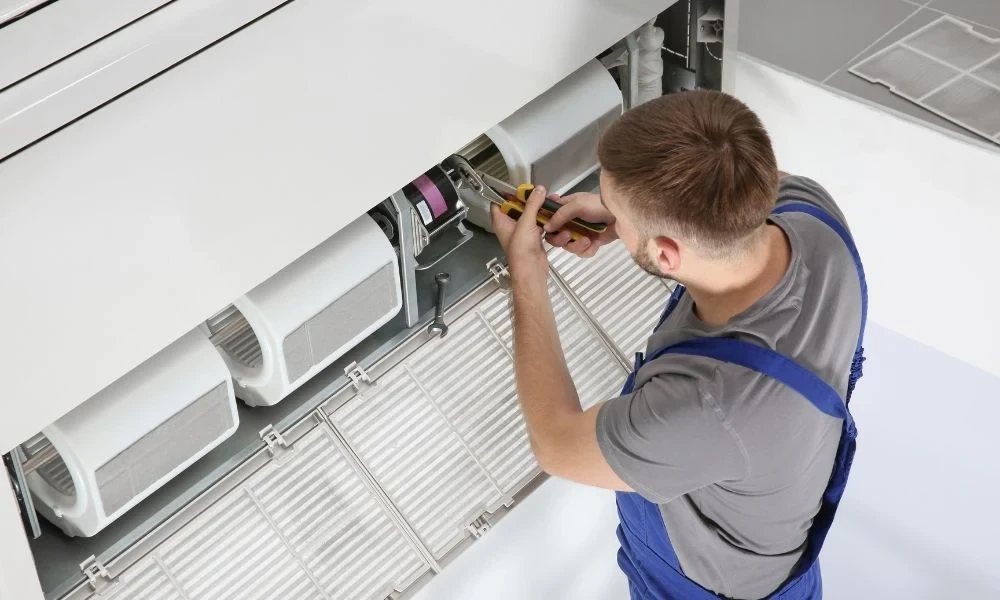

One August afternoon, a 12-year-old rooftop unit at a bakery I used to visit quit around 2 p.m. By 4 p.m. the pastry case was sweating, the dining room smelled like warm butter, and the owner was handing out free coffee to people who had already decided to leave. The repair bill that week was about $1,400. The lost weekend of sales was closer to $6,000. That ratio is the whole story of commercial HVAC, and it is why I tell any business owner the same thing: your system is a revenue asset, not a maintenance line item.
So here is the practical version. You will learn the four failure points that cause most commercial breakdowns, how to spot them before they take your building offline, and what a good repair visit should actually look like from the moment you call. If you would rather not read the diagnosis and just want someone on site, HVAC repair services for businesses typically run emergency calls for rooftop units and split systems alike, which matters when your doors open at 7 a.m. and the air is already stale.
Fair warning before we go further: most of what kills a commercial system is not age. It is neglect dressed up as cost savings.
Why commercial systems fail earlier than they should
Residential units get babied. Someone hears a rattle, calls a tech, and it gets fixed. Commercial equipment lives a harder life. It runs 12 to 16 hours a day, pulls in grease, dust, and cotton from the parking lot, and sits in a mechanical closet nobody opens until something smells wrong.
Four things cause the bulk of commercial failures in my experience:
- Dirty condenser coils. A coil caked in grime raises head pressure and makes the compressor work itself toward an early grave.
- Filters nobody changed. Restricted airflow is the quiet killer. Everything downstream suffers.
- Refrigerant leaks. Slow leaks hide for months. You notice the electric bill first, the comfort second.
- Controls and zoning drift. Sensors go bad, dampers stick, and suddenly half your building bakes while the other half freezes.
None of those are dramatic. That is the problem. They fail politely for a while, then all at once on the hottest day of the year.
The real cost is not the repair
Every owner asks the same question when a unit dies: how much to fix it? Honestly, that is the smaller number. The bigger number is the business you cannot do while it is down.
Think about what stops when the air stops. A restaurant cannot legally or comfortably serve people in an 88-degree dining room. A small manufacturer may have to halt a production line because the equipment itself needs cooling. A retail shop loses browsing time, and browsing time is where the sale happens. Office space gets sent home, which sounds cheap until you remember you are still paying rent on empty desks.
Here is a rough framework I use when talking to owners about this. Call it the three-layer loss.
| Layer | What it includes | How fast it adds up |
|---|---|---|
| Direct | Repair parts, labor, emergency premium | Same day, one invoice |
| Operational | Lost sales, halted production, sent-home staff | Hourly, quietly |
| Reputational | Reviews, walkouts, missed reservations | Weeks, and hard to reverse |
The third layer is the one people underestimate. You can replace a compressor. You cannot easily replace the customer who posted that your dining room felt like a sauna.
How to tell you have a problem before it becomes an outage
You do not need a diagnostic gauge to notice trouble. You need to pay attention to five signals most owners brush off:
- Your energy bill creeps up. A 10 to 15 percent jump with no change in operations usually means the system is working harder for the same result.
- Some rooms never feel right. Persistent hot or cold spots point to zoning, dampers, or controls.
- You hear it from the hallway. Grinding, squealing, or a compressor that cycles on and off rapidly are all warnings.
- Water where water should not be. Drain pan overflow and ice buildup on coils signal airflow or refrigerant trouble.
- It runs nonstop and still loses ground. That is a system telling you it has lost capacity.
Two or three of those together is not a coincidence. That is your cue to schedule a service visit during the week instead of paying an emergency premium on a Saturday.
What a good repair visit looks like
A decent technician shows up with a plan, not just a wrench. Here is the sequence I would expect from any company you hire, whether it is a small shop or a regional outfit.
Step one: you describe the symptom, not the diagnosis. Tell them what you feel and hear. Do not tell them what to replace. You are paying for their diagnosis.
Step two: they check airflow before refrigerant. Filters, belts, blower, and coils come first because they are cheaper to fix and often the actual cause. A tech who jumps straight to adding refrigerant without checking airflow is guessing with your money.
Step three: they give you a written picture of the system. What failed, what is aging, what is fine. You want to know whether you are repairing a healthy unit or pouring money into one that is done.
Step four: they talk about the repair versus replacement line honestly. A common industry rule of thumb is that if a repair costs more than a third of replacement and the unit is past its expected service life, replacement deserves a real conversation. Any contractor worth trusting will walk you through both numbers instead of steering you.
One more thing. Ask them to show you the failed part. Not because they are lying, but because a good tech is happy to. The ones who get defensive are the ones I would not call twice.
Preventing the next breakdown
The single highest-return thing a small business can do is a maintenance agreement with two visits a year, once before cooling season and once before heating season. In between, your staff can handle the cheap stuff: change filters on schedule, keep the area around outdoor units clear of debris and landscaping, and write down anything unusual in a shared log.
That log matters more than people think. When a tech can read that the west unit has been short-cycling for three weeks, they arrive with a hypothesis instead of starting from zero. That saves you an hour of diagnostic billing.
Here is my honest opinion on the money question, since owners ask me constantly. If your building is more than ten years old and you are calling for repairs more than twice a year, stop budgeting for fixes and start budgeting for replacement. You are not saving money. You are paying rent on a dying machine.
Frequently overlooked, frequently expensive
Two items deserve their own mention. First, refrigerant. Modern regulations have changed what can be used and how systems must be handled, and it affects both cost and timeline. The Department of Energy publishes guidance on efficiency standards and refrigerants that is worth skimming if you are planning a replacement.
Second, documentation. If you own or lease commercial space, remember how much of your operation depends on that quiet box on the roof, and how much of it is written into your lease or ownership obligations under the Small Business Administration’s basic guidance for facility upkeep.
For anything involving controls, sensors, or connected building systems, the National Institute of Standards and Technology keeps reference material on building system interoperability that explains why a mismatched controller can sabotage an otherwise healthy unit.
Signs you have actually hired the right company
Three quick tells. They answer the phone during business hours and call back same day. They quote a diagnostic fee up front instead of surprising you at the end. And they leave the mechanical room cleaner than they found it. That last one sounds trivial until you have seen a compressor changeout where nobody bothered to put the panels back.
Price matters, but it is not the first filter. Availability and honesty come first, because the true cost of a commercial HVAC failure is measured in the hours your doors are shut, not in the invoice.
So here is the question worth answering this week: if your main unit quit tomorrow morning, do you know exactly who you would call, and how long they would take to get there? If that answer is fuzzy, that is your next task.