
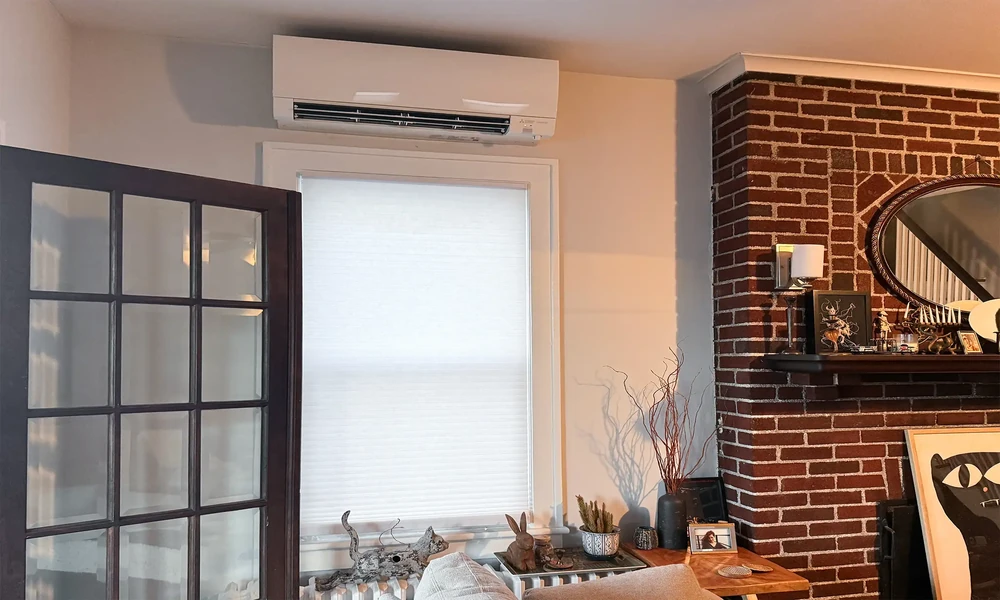

Your ductless heat pump ran flawlessly through two winters and suddenly stopped blowing cold air on the hottest day of August. You’ve already power-cycled the unit twice, cleaned the filter, and stared at a blinking E6 code for ten minutes. Sound familiar? Most homeowners hit this wall at least once, and the wrong call – either ignoring it or over-reacting – costs real money. This guide maps out exactly which symptoms you can handle yourself and which ones demand a trained technician before the problem gets worse.
The Rise of Ductless Systems and Why Repairs Are Getting More Common
Ductless mini splits are everywhere right now, and not just in new construction. Homeowners retrofitting older homes, adding garage studios, and replacing window units have driven a massive adoption curve. According to RMI’s 2026 market tracking report, annual heat pump sales have increased by 70% over the past 20 years, while gas furnace sales dropped 7% across the same period. More units installed means more units eventually needing service – simple math.
The good news: ductless systems are genuinely reliable. The bad news: because they run year-round as both heaters and air conditioners, they accumulate runtime hours faster than equipment that sits idle half the year. A system doing double duty will show wear on compressors, fan motors, and refrigerant lines sooner than a single-season AC. That’s not a design flaw – it’s a usage reality worth knowing.
Symptoms You Can Actually Fix Yourself
Before calling anyone, run through this short list. These are the issues that don’t require tools, certifications, or a service call.
- Weak airflow but no error code. The most common culprit is a clogged filter. Ductless units pull air directly through a washable mesh filter on the indoor head. Rinse it under warm water, let it dry completely, and reinsert it. Airflow often returns to normal immediately.
- Unit turns on but won’t respond to the remote. Dead remote batteries cause more “broken heat pump” calls than any actual system fault. Replace them first.
- The fan runs but nothing heats or cools. Check that the unit is set to the correct mode. Heat pumps are easy to accidentally leave in fan-only mode, especially after someone adjusts settings on the remote without fully understanding it.
- Ice on the outdoor unit in winter. A light frost coating is completely normal. It’s a sign the defrost cycle is working. Solid ice buildup that lasts more than a few hours after temperatures rise is a different matter – that one belongs in the “call a pro” category below.
Symptoms That Require a Licensed Technician
This is where people make expensive mistakes by waiting. The symptoms below won’t fix themselves. Left unaddressed, they tend to escalate from a repair to a full replacement.
Error codes you can’t clear. Every major brand – Daikin, Mitsubishi, LG – uses alphanumeric fault codes to point technicians toward specific component failures. An E6 on a Daikin indoor unit, for instance, signals a communication fault between the indoor and outdoor heads, often tracing back to a wiring issue or a failed circuit board. You can find the code meaning in the manual, but diagnosing and fixing the root cause is a different skill set entirely.
Refrigerant-related symptoms. If your system is blowing air but it never gets properly cold or warm even after the filter is clean and the mode is correct, low refrigerant is a strong suspect. Refrigerant doesn’t “run out” under normal conditions – if the level is low, there’s a leak somewhere in the line set. Charging the system without finding and sealing the leak is money wasted. Refrigerant handling also requires an EPA 608 certification. This one is never a DIY job.
Unusual sounds. A soft hum or the quiet click of the compressor starting is normal. Grinding, rattling, or a high-pitched squeal coming from either the indoor head or the outdoor unit means something mechanical is failing. Fan motor bearings, loose impeller blades, and compressor wear all present as noise before they present as complete failure.
Persistent ice on the outdoor coil. As mentioned above, heavy ice that won’t clear after the outdoor temperature rises above freezing points to a defrost board issue, a refrigerant problem, or severely restricted airflow on the outdoor unit. None of those self-resolve.
Tripped breakers or electrical burning smell. These are stop-what-you’re-doing symptoms. Turn the system off at the breaker and call a technician the same day.
The STOP or CALL Decision Framework
Here’s a practical table to use the next time something seems off. I built this based on the failure patterns above – the logic is to distinguish between owner-serviceable issues (filter, battery, mode) and faults that touch refrigerant, electrical, or mechanical components.
| Symptom | Try This First | Call a Pro If… |
|---|---|---|
| Weak airflow | Clean or replace the filter | Airflow is still poor after cleaning |
| Won’t respond to remote | Replace remote batteries | New batteries don’t help |
| Fan runs, no heating or cooling | Check mode setting on remote | Mode is correct and still no output |
| Error code displayed | Look up code, power cycle once | Code returns after power cycle |
| System never reaches set temperature | Check for blocked vents or filters | Problem persists – possible refrigerant leak |
| Grinding or squealing noise | Nothing – don’t run it | Immediately |
| Heavy ice on outdoor unit | Let it thaw, check airflow clearance | Ice returns or won’t clear in warm weather |
| Burning smell or tripped breaker | Turn system off at the breaker | Immediately – same day |
How Often Should You Actually Schedule Maintenance?
Skipping annual service is the single most consistent factor in shortened equipment lifespan. The U.S. Department of Energy recommends that homeowners have a professional technician service their heat pump at least once a year, with tasks including refrigerant charge verification, electrical terminal inspection, coil cleaning, and airflow measurement. That’s not a manufacturer upsell – it’s the government’s own guidance for keeping these systems running safely and efficiently.
Annual service pays for itself in multiple ways. It catches the small refrigerant drip before it becomes a dead compressor. It catches a corroded electrical connection before it trips a breaker at midnight in January. And in most cases, it’s required by the manufacturer to keep the warranty valid.
For ductless systems specifically, I’d push for twice-yearly service if the unit runs year-round. Once before cooling season and once before heating season. The filter should be cleaned every four to six weeks during heavy-use periods – not once a year.
Choosing the Right Repair Partner
Not every HVAC technician has deep experience with ductless systems. These units use different refrigerant handling procedures, brand-specific diagnostic protocols, and error code libraries that vary between Daikin, Mitsubishi, Fujitsu, and others. When your Daikin mini split throws a fault code, you want a technician who knows that brand’s system – not someone who’s going to spend the first hour figuring out what the manual says.
Ask potential service providers whether their technicians hold factory training certifications from the specific brand you own. For homeowners in the Pacific Northwest, finding a provider with dedicated ductless expertise makes a real difference. Expert HVAC troubleshooting and repair from technicians trained on ductless technology means faster diagnosis, correct refrigerant handling, and repairs that actually hold – not a generic approach borrowed from a traditional ducted system playbook.
One Last Thought
Ductless heat pumps are durable machines when they’re treated right. The homeowners who get the longest life from their systems aren’t the ones with the best luck – they’re the ones who clean filters consistently, schedule annual checkups, and call a technician the moment something sounds or smells wrong instead of running the system for three more weeks “to see if it fixes itself.” It never fixes itself. But a good technician usually can.