
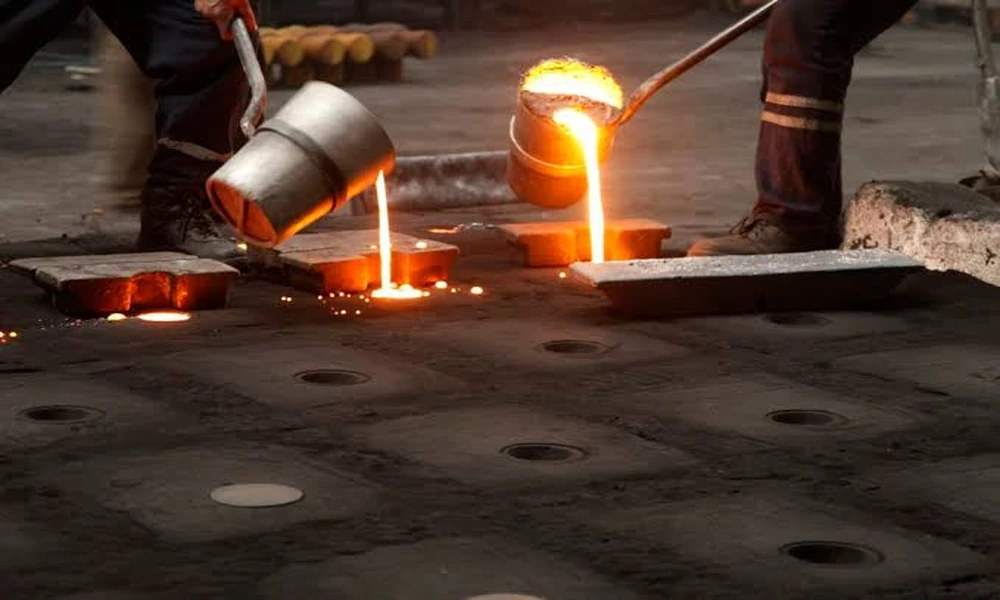

Iron casting procurement decisions in the United States are frequently driven by price, and price alone, to a degree that consistently produces disappointing outcomes. A casting that arrives dimensionally off-spec, with porosity that only becomes apparent during machining, or with a mechanical property profile that falls short of what the application demands, costs far more to deal with than the price difference between the winning bid and a more technically rigorous supplier would have represented. Understanding what to evaluate in an iron casting company beyond the per-piece quote is the starting point for procurement decisions that produce reliably good results rather than recurring surprises.
Gray Iron vs Ductile Iron: Getting the Alloy Right
The foundational specification decision in industrial iron castings procurement is the alloy selection, and it is one that downstream procurement teams sometimes accept from a design specification without fully understanding its implications. Gray iron, the most widely produced iron casting alloy in the US, offers excellent machinability, good vibration damping, and adequate strength for the majority of industrial applications. Its graphite microstructure in the form of flakes gives it characteristic machinability but also limits its tensile strength and impact resistance relative to ductile iron alternatives.
Ductile iron, in which graphite is present as spherical nodules rather than flakes through the addition of magnesium during processing, delivers significantly higher tensile and yield strength, improved ductility, and better impact resistance than gray iron at comparable hardness levels. For applications involving shock loading, elevated stress, or where some plastic deformation before fracture is a design requirement, ductile iron is the technically correct choice regardless of the marginal additional cost its processing involves. A gray iron casting supplier who does not proactively discuss this distinction with customers specifying gray iron for demanding applications is not serving the buyer’s long-term interest.
What a Cast Iron Foundry’s Quality System Actually Involves
The quality system of a cast iron foundry determines whether the castings it produces consistently meet the dimensional, mechanical, and metallurgical specifications that customers have agreed upon. A foundry operating without calibrated melting controls, without documented chemistry verification of every heat, and without systematic dimensional inspection of produced castings is essentially producing to a best-efforts standard rather than a controlled specification. The consequences appear in receiving inspection rejections, machining surprises, and field failures that trace back to foundry process variability.
Foundries with genuine quality systems maintain spectroscopic chemistry verification of every heat before pouring, systematic hardness testing of castings from each heat, dimensional inspection using calibrated gauging and CMM equipment for complex parts, and documented process records that allow any quality issue to be traced back to its specific heat, pattern, and process conditions. When evaluating a custom iron castings supplier, asking specifically about these process verification steps, rather than simply requesting a quality certificate, distinguishes foundries with genuine process control from those with documentation without discipline.
Custom Iron Castings: Pattern Ownership and Tooling Investment
Custom iron castings involve pattern tooling that must be designed, produced, and owned by one of the parties in the supply relationship. Understanding who owns the pattern, what happens to that pattern if the supply relationship changes, and what the tooling amortization structure looks like within the per-piece pricing is essential to avoiding the leverage imbalance that some suppliers create through tooling ownership arrangements that make switching suppliers prohibitively expensive even when service or quality is unsatisfactory.
Iron Castings Manufacturer Evaluation: Beyond the Factory Tour
An iron castings manufacturer evaluation visit is a valuable step in supplier qualification, but it requires the right questions to produce useful information. Factory cleanliness and equipment age are visible but not necessarily predictive of casting quality. Melt control discipline, pattern maintenance standards, sand system management, and the experience level of the foundry’s metallurgical staff are the factors that actually determine whether a foundry produces consistent, high-quality castings. Asking to see specific process records, melt logs, and inspection data from recent production runs provides far more reliable quality evidence than a general facility tour.
Metal Casting Supplies and the Complete Supply Picture
Buyers sourcing metal casting supplies and finished castings from a single supplier who manages the complete supply chain, from raw material sourcing through casting, machining, and warehousing, simplify their logistics and quality accountability compared to managing multiple vendors for different steps of the same part’s production journey. Suppliers offering in-house machining alongside casting, with warehousing and just-in-time delivery capability, reduce the total cost of ownership in ways that a casting-only supplier with lower per-piece pricing cannot match when the full procurement and logistics picture is calculated.