
Three quotes for the same driveway gate came back at prices thousands of dollars apart, and the cheapest one didn’t include the safety sensors. That gap is the whole ballgame when you start shopping for gate automation. Motors are the easy part to compare. Everything that decides whether you love or hate the gate in year five hides in the details nobody puts on the first page of a quote.
You’ll walk away from this with a working filter for proposals, a sense of which power setup fits your property, and a short list of questions to ask before anyone digs a trench. If you’d rather skip the research and hand the whole thing to a contractor who does this daily, companies like automatic gate installation in Louisville, KY handle design, permitting, and wiring as one job. For everyone else, keep reading, because the decisions below are yours to make even if you never touch a wrench.
Sliding, swing, or something else?
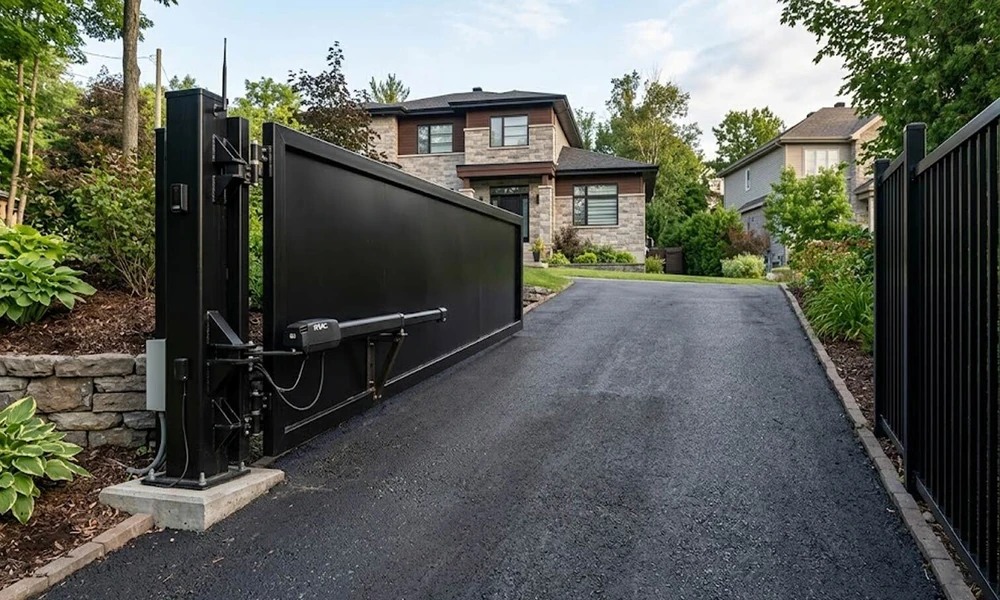
Start with how the gate moves, because that choice locks in your motor budget before you’ve picked a brand. Swing gates feel natural on a curved driveway and suit most residential lots. They also need clearance to swing inward, and if your drive slopes, the opener works harder every single cycle. Sliding gates need a flat runway beside the opening and about 1.5 times the gate width in free space to slide into. That runway is often the deal breaker on tight suburban lots, and it’s usually the right answer on commercial sites where vehicles queue up.
Barrier arms are the third option and the one people forget. They’re cheap per opening, fast, and ugly, which makes them a fit for parking lots and a poor fit for a home you care about. My take: if your driveway has any pitch at all, price a slider first even when you assumed a swing gate. The installation cost stings up front and the maintenance bill stays quieter for years.
Power, and the day the grid quits
Every automatic gate needs a plan for the outage, and this is where cheap quotes go silent. Solar with a battery bank works well at the end of a long rural drive where trenching power costs more than the hardware. A trenched line from the house is more reliable for most properties inside city limits. Either way, ask for battery backup sizing in writing, along with how many open cycles you get when the power dies.
Wiring is the other invisible line item. Low voltage control wire, a loop detector for vehicle detection, conduit under the drive, and a keypad pedestal all need to be in the ground before the concrete goes down. If your quote doesn’t list conduit, you’re about to pay for it later at emergency-pricing rates.
The safety gear you should treat as non-negotiable
This is the section I’d frame and hang in the garage. A gate that moves on its own is a machine, and machines need the ability to sense a person in the way. External entrapment protection devices, the photo eyes and edges that reverse a closing gate, are what separate a proper system from a lawsuit waiting on a schedule. The National Fire Protection Association maintains the consensus code family that governs automated gate systems, which is why reputable installers follow its entrapment protection provisions rather than installing a bare motor and calling it done.
You want three things verified on the day of handover. Photo eye pairs on both sides of the opening, a reversing edge on any moving leaf that could contact a vehicle or a person, and an audible or visual warning before the gate starts moving at a commercial site. Test the eyes yourself with a broom handle before the installer leaves. If the gate doesn’t reverse, don’t sign.
What “smart gate” actually gets you
App control is the feature that sells systems and the feature that matters least on day one. The useful stuff sits underneath it.
- Keypad or intercom for guests and deliveries, so nobody parks in the street to wait.
- Vehicle detection loops that stop a closing gate from coming down on a bumper.
- Card readers or RFID for a business that needs an access log instead of a chain and a padlock.
- Remote monitoring so a facility manager sees who came through and when.
For a home, I’d spend the money on a quality intercom and a rock solid backup battery before I spent it on a phone app. For a business, flip that. The access log is the product, and the gate is just the door.
Questions to ask before you sign anything
Bring this list to every estimate, including the one you already like. The answers tell you more than the price does.
- Is the operator listed with a recognized testing laboratory, and can you show me the listing? The Underwriters Laboratories mark on a gate operator tells you the equipment was tested to a published safety standard.
- Who pulls the electrical permit, and is that cost inside the number?
- How many cycles per hour is this motor rated for, and how many times a day does my household actually open the gate?
- What happens to the warranty if I add card readers next year?
- Who services it, how fast, and what’s the trip charge?
- Does the proposal include the exit loop, or is that an extra?
One more, and it’s the one I’d rank first: ask to see two gates they installed at least three years ago, and go look at them. Hinges sag, coatings fade, and control boxes fill with water in places with real winters. A three-year-old gate is the most honest reference a contractor can offer.
The honest math on cheap versus right
Federal consumer guidance from the Federal Trade Commission keeps repeating the same theme for a reason: get the terms in writing before work starts. That covers the itemized quote, the warranty language, and the payment schedule. Nothing about a driveway gate is worth a handshake deal, and deposits that swallow 60 percent of the contract up front deserve suspicion.
My rule of thumb after watching too many fix-it calls: budget roughly a third of the project for the gate itself, the motor, and the controls, and treat the rest as the invisible work that makes it last. Posts, footings, conduit, safety devices, and permits don’t photograph well. They’re also why one gate runs fifteen years and the one next door needs a new board every spring.
What you’re really buying is a smaller set of headaches. The right installer will tell you when a slider fits better than the gate you came in wanting, and they’ll put the photo eyes on the quote without being asked. Anyone who shrugs at the safety gear has told you everything you need to know about how the rest of the job will go.
So go stand at the bottom of your driveway with a tape measure and a notebook. Measure the slope, the swing clearance, and the distance to the nearest outlet. Then call three installers and ask your new questions. The gate you end up with will be one you forget about for a decade, which is exactly the point.