
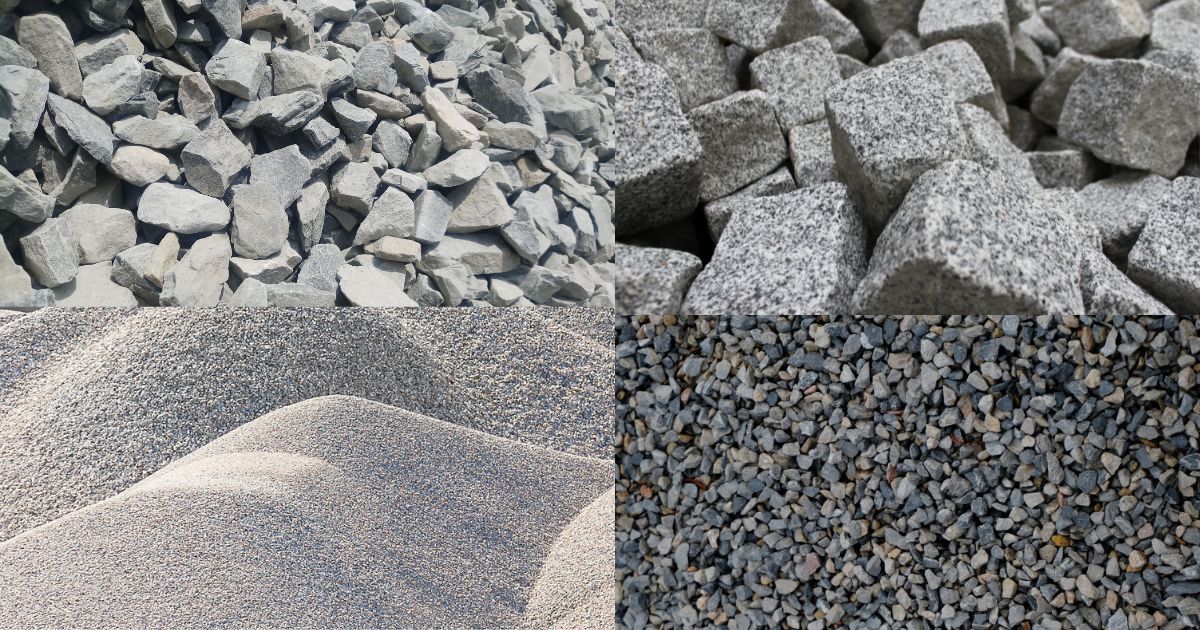

The construction projects in Texas rely on a strong foundation shaped by geology and climate. Mineral aggregates form the backbone of roads, bridges, and commercial structures across the state. Builders value materials that deliver durability under heat, traffic, and shifting soil.
Regional diversity gives this state access to a rich range of stone and sediment resources. Each type of aggregate offers a distinct blend of strength, density, and resistance to wear. Careful selection of Texas mining and aggregate materials supports structural stability and long service life in demanding conditions.
Crushed Limestone as a Structural Cornerstone
Crushed limestone plays a major role in Texas infrastructure. Quarries across central and northern regions supply abundant reserves with consistent quality. High calcium content supports strong bonding in concrete mixtures. Dense structure helps resist compression under heavy loads.
Road bases and foundations depend on this material for stability. Angular fragments interlock tightly, which reduces movement under pressure. Drainage improves through controlled particle grading. Reliable performance in hot weather makes limestone a preferred option for highways and large slabs.
Granite Aggregates for Heavy Duty Strength
Granite stands out for its exceptional hardness and load-bearing capacity. The sources include deposits from the Hill Country and nearby zones in Texas. Crystalline structure provides resistance to abrasion and crushing. Builders select granite where long-term endurance matters most.
Key qualities that make granite valuable include:
- High compressive strength suitable for bridge supports.
- Strong resistance to surface wear from vehicle traffic.
- Low porosity that limits moisture penetration.
- Stable mineral composition under temperature shifts.
- Consistent particle shape after mechanical crushing.
Concrete made with granite aggregate handles intense stress. Industrial floors and high-rise foundations benefit from this durability.
River Gravel for Versatile Construction Support
River gravel contributes flexibility across many project types. Natural smoothing occurs through water flow over long distances. Rounded edges allow easy mixing and placement in concrete. Surface texture promotes workable blends for slabs and pavements.
Commercial projects also use river gravel for drainage layers. Water passes freely through the spaces between stones. Subsurface stability improves around retaining walls and walkways. Visual appeal adds a clean, natural look to exterior designs.
Sandstone Aggregates for Controlled Load Distribution
Sandstone serves specialized structural purposes in several regions of Texas. Fine-grain composition offers balanced strength with moderate density. Crushing produces angular particles that compact well. Engineers use this material in layers that spread the weight evenly.
Base courses under roads benefit from this property. Pressure disperses across a wider area, which reduces localized stress. Construction teams value predictable compaction behavior. Sandstone supports stable platforms for surface materials.
Basalt and Trap Rock for High Impact Resistance
Basalt and trap rock deliver exceptional toughness in demanding environments. These igneous stones form under intense geological pressure. Dense composition provides superior resistance to cracking and deformation. Projects in Texas that require extreme durability turn to these materials.
Important characteristics include:
- Excellent performance under repeated heavy loads.
- Strong resistance to chemical and mechanical weathering.
- Dark color that absorbs heat without rapid breakdown.
- High-friction surface for skid-resistant pavements.
- Long service life in high traffic corridors.
Airport runways and industrial yards rely on such aggregates. Structural integrity remains intact despite constant mechanical stress.
Screened Asphalt Sand for Stable Surface Layers
Screened asphalt sand plays an important role in paving and surface preparation. Fine particle size allows tight compaction that creates a firm base. Controlled grading supports uniform distribution in asphalt mixes. Smooth texture helps produce consistent surface finishes.
Paving contractors rely on this material for leveling and bedding applications. Stability improves beneath pavers, curbs, and road overlays. Moisture drains effectively through properly prepared layers. Screened asphalt sand supports durable, even surfaces across residential and commercial projects.
Thus, Texas mining and aggregate materials shape the strength of construction projects from the ground up. Each material offers distinct mechanical advantages suited to specific needs. Careful selection ensures stable structures that stand firm for decades.